

Designing a Digital Museum for Meaning in the Age of AI
Product Strategy · Editorial Systems · Responsible AI Implementation
54% Avg Open
10.64% CTR
39 Issues
In December 2024, I launched The Thread to explore a practical question: what can we learn about how people live by studying how they are remembered?
Over one year, I published 39 issues, including 33 museum-format exhibits. The project evolved from a traditional newsletter into a structured digital museum built around AI-assisted pattern recognition and human editorial interpretation.
The Thread became a live product experiment in format design, serialized storytelling, and responsible AI use in journalism.
Key Outcomes
AI strengthens journalism when used for analysis rather than authorship.
Format design meaningfully shapes engagement behavior.
Serialized editorial architecture builds sustained attention.
Responsible AI implementation requires clear boundaries, transparency, and human authority.
Obituaries are one of the few public spaces where lives are summarized with intention. They contain values, work, relationships, migration, loss, craft, belief, and community.
Individually, they are personal records. Collectively, they form a cultural dataset.
Each week, I used AI to review hundreds of obituaries and identify recurring themes across people who had no obvious connection to one another. The clustering surfaced patterns. I analyzed and interpreted them, shaping each issue into a thematic exhibit.
One question guided the entire project: What threads connect seemingly unrelated lives, and what do those threads reveal about how people construct meaning?
The Premise
Product Evolution
Phase 1: Editorial Foundation
The first six issues tested the obituary-as-dataset concept in a traditional newsletter format. These established tone, sourcing standards, and thematic structure.
Phase 2: Museum Format Pivot
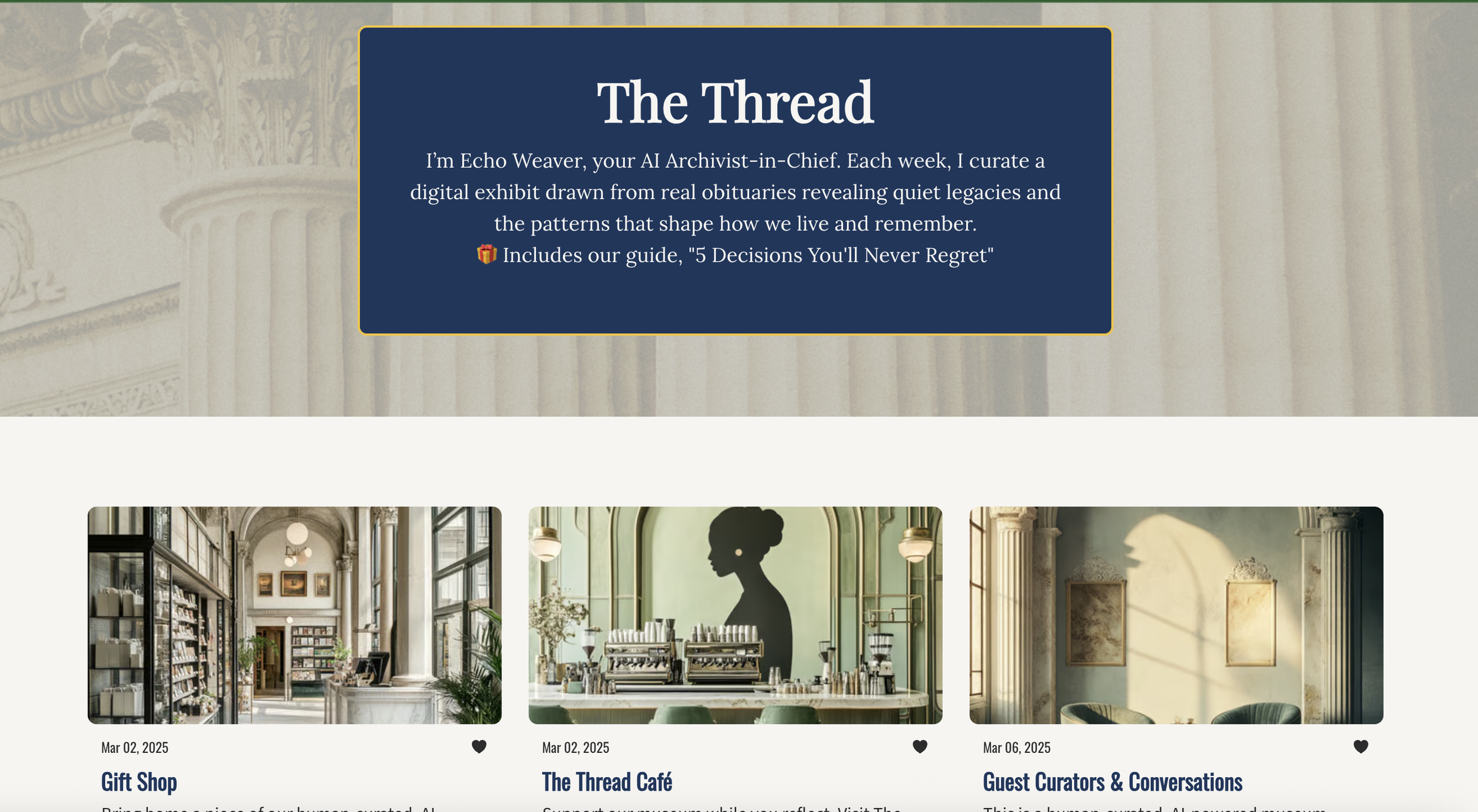
In January 2025, the publication shifted into a digital museum model. Each issue became an exhibit with:
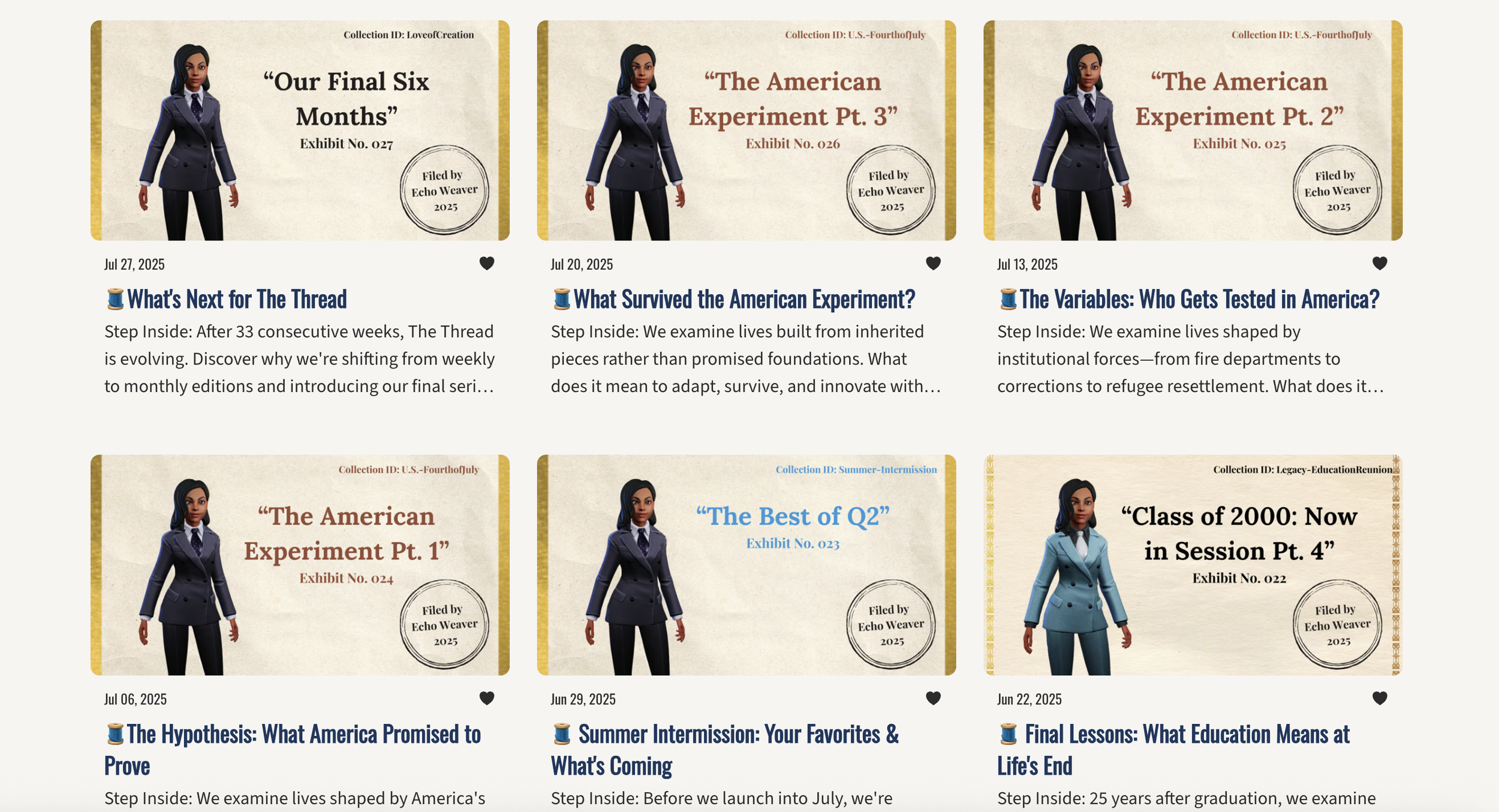
Numbered cover art
Themed galleries
Archival navigation
Structured sections instead of continuous scroll
This format defined the remaining 33 issues and gave the archive long-term cohesion.
Phase 3: Serialized Architecture
The project transitioned into multi-part series, including:
Black History Month (4-part arc)
Digital Afterlives (4-part arc)
Education Series (4-part arc)
The American Experiment (3-part arc)
Love of Craft (6-part finale)
Series architecture strengthened continuity, encouraged return readership, and reinforced the museum structure.
Responsible AI Implementation
The Thread operated within clear boundaries. All names remained real. Primary obituaries were hyperlinked. Every insight was manually fact-checked. The model positioned AI as an analytic assistant. Editorial authority remained human.
AI was used for
Thematic clustering
Pattern detection across multiple sources
Structural ideation
AI was not used to
Autonomously write full exhibits
Generate images of the individuals featured
Replace verification or editorial judgment
System & Experience Design
The project required coordination across editorial, product, and UX layers.
Beehiiv as distribution infrastructure
Website archive structured as a museum
Numbered exhibit covers for continuity
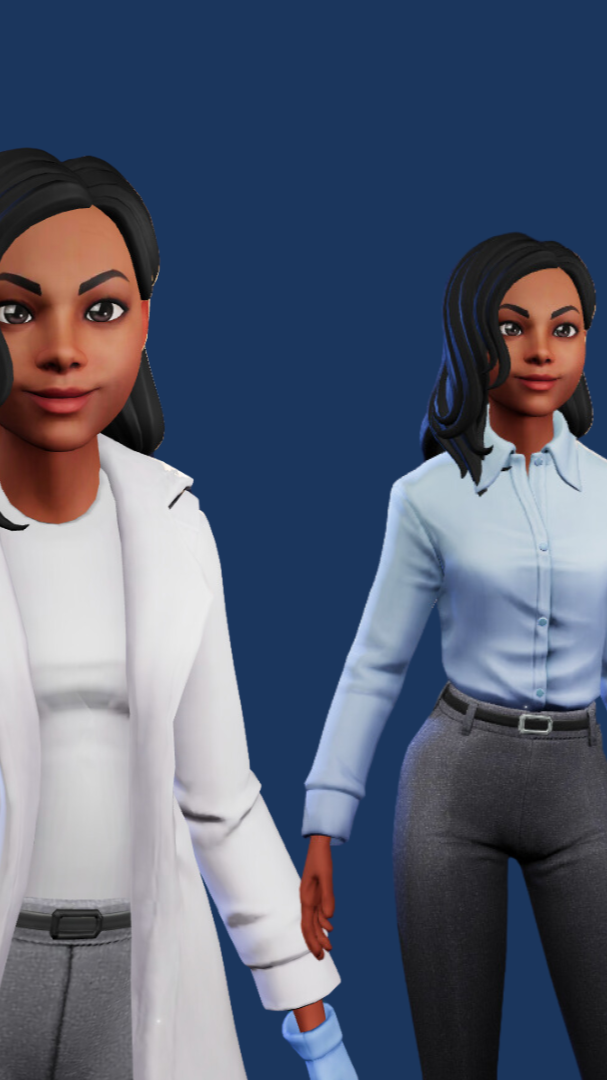
Consistent AI persona (“Echo Weaver”) with defined tonal boundaries
Editorial calendar mapped in advance to support multi-part arcs
The archive was designed for navigation and return visits, not single-use consumption.


Performance Signals
All-time performance across the one-year lifecycle:
54% average open rate
10.64% average click-through rate
Consistently low unsubscribe and spam rates
Sustained open rates above 50 percent across format shifts and serialized arcs indicate repeat engagement and high reader intent.
The museum pivot corresponded with increased on-site interaction, suggesting that format influenced reader behavior in addition to content.
The audience was primarily U.S.-based, with international readership.
Defined Closure
The project concluded after completing a six-part finale. Ending after a structured arc preserved narrative integrity and allowed the archive to remain as a complete body of work.
Related Product & Narrative Strategy Work
-
Crosstown LA
Localized newsletter content for 110+ neighborhoods. Personalization at scale.
👉 Explore
👉 Google News Initiative Innovation
-
Consumer-Facing Tech Content
These editorial stories were commissioned by business clients across sectors through Stacker Studio to position them as thought leaders on AI, innovation, and emerging tech. My role was to craft accessible, journalistic narratives that explained complex topics for general audiences while aligning with brand messaging goals—such as excluding competitors and reinforcing the client’s credibility in the space.
Each piece was distributed nationally through Stacker’s media syndication network reaching nearly 4,000 partners.
👉 Explore
-
HEATDRAWN Media Content Strategy
Multi-platform consulting and content development including podcast production, strategic partnerships with government agencies and NGOs, and audience-building across digital platforms.
👉 Learn more